

Learning Module for Digital Media Design

Culturally Responsive Classrooms
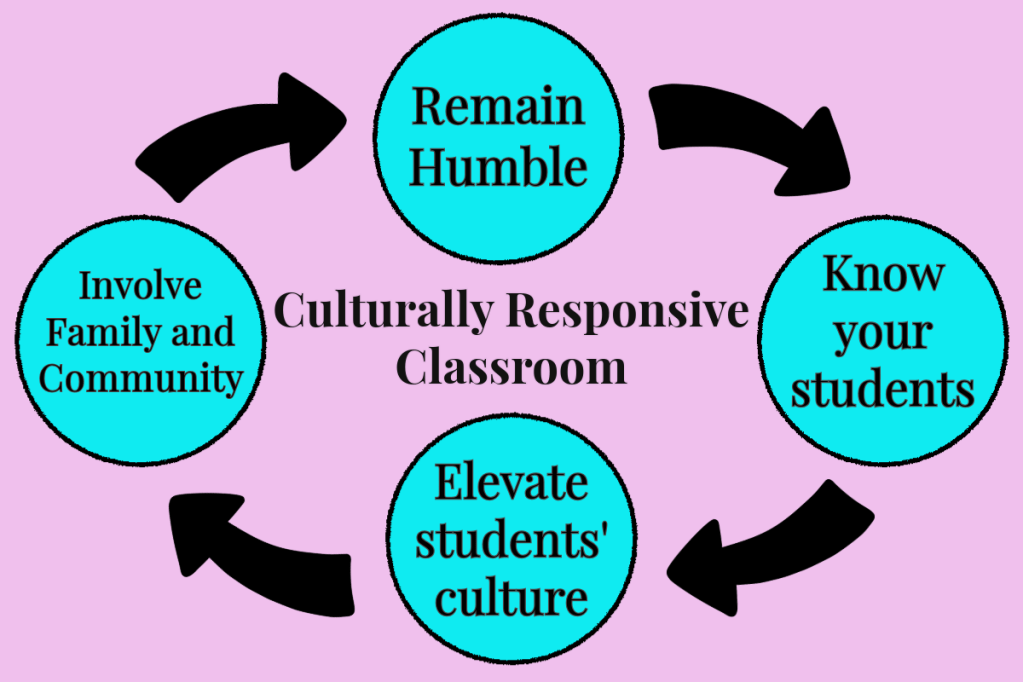
Equity in the classroom is to key to ensuring every student has the opportunity to succeed. Culturally responsive classrooms develop equity. Culturally responsive classrooms require that students’ culture and community discourse is at the center of their learning. This requires educators to take the necessary steps to understand their students and develop a student-centered classroom. Many school districts and educators struggle to develop culturally responsive classrooms and never achieve the equity required to enable student success. This is especially true for Native American students in the United States.
Analysis
This module was built to educate pre-service and in-service educators about the historical relationship between Native people and public education in the United States. The first step to establishing a culturally responsive classroom is for educators to remain humble. This module was designed to help educators develop that humility by learning about the forced relocation of Native children from their homes and placement into government sponsored boarding schools. This was achieved by using photos and artifacts provided by the Carlisle Indian School Digital Resource Center.
This module can be used when pre-service educators are learning about building their classroom culture. This module should be used when in-service educators join a school district that has a Native American population.
Design
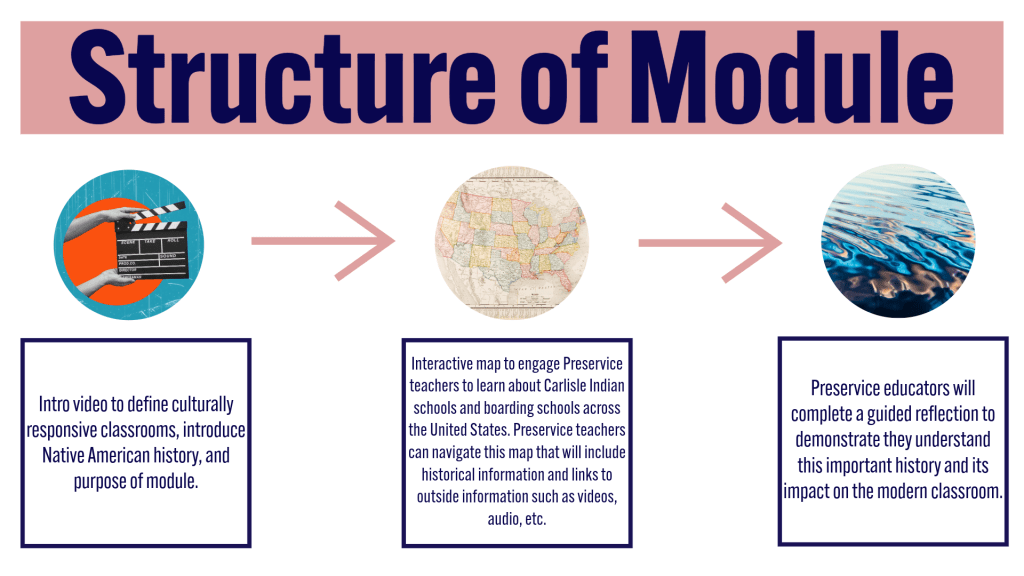
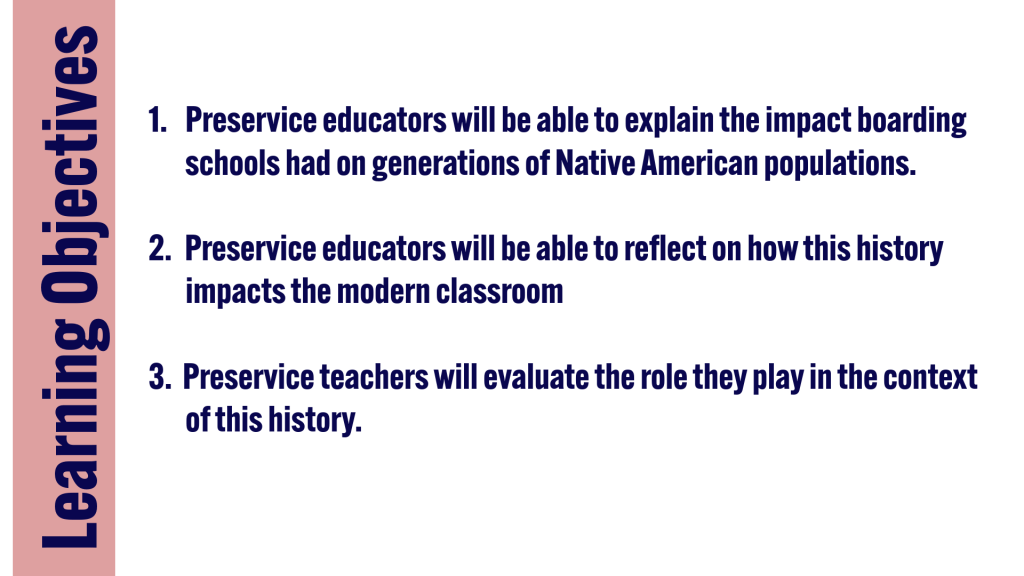
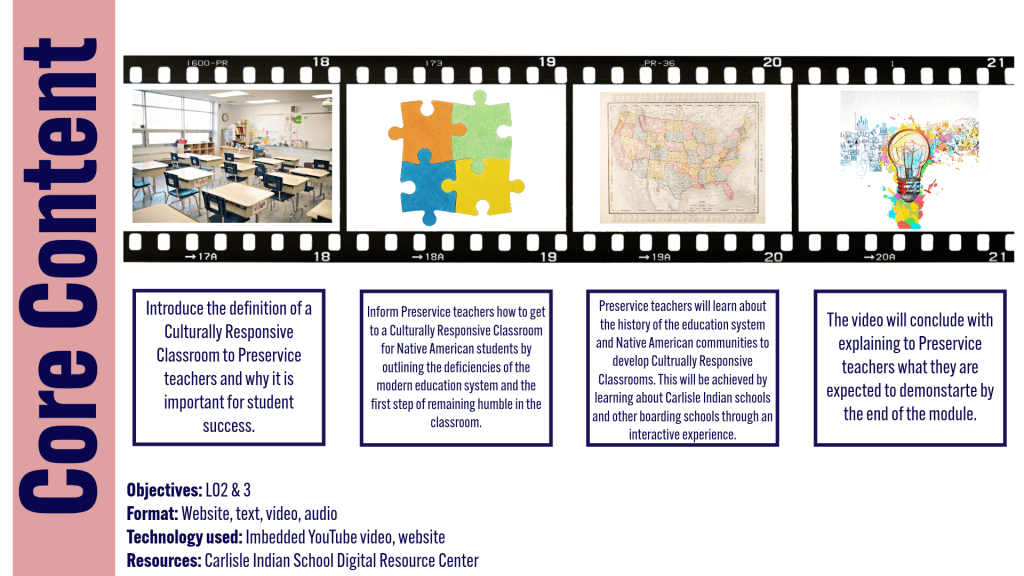
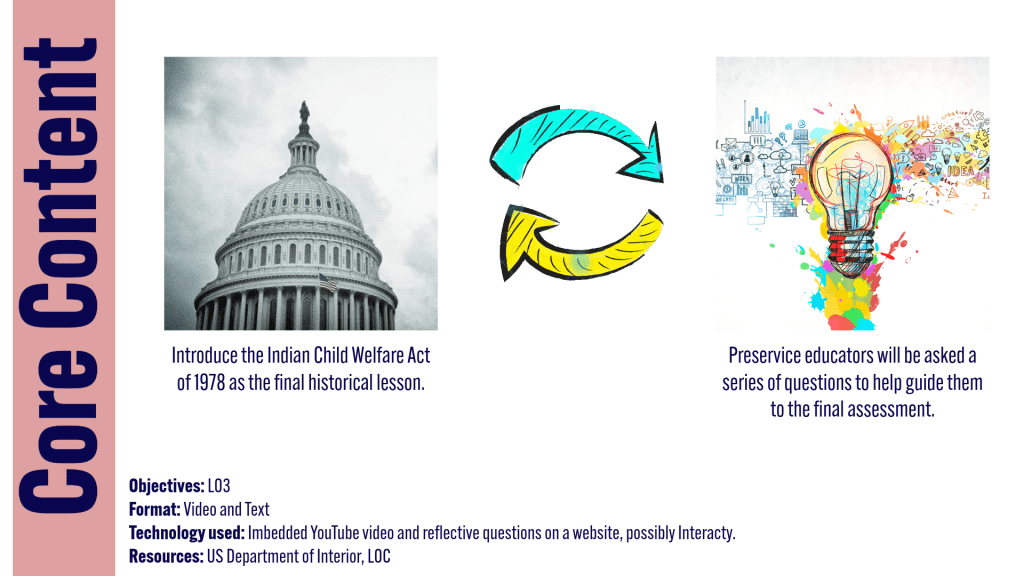
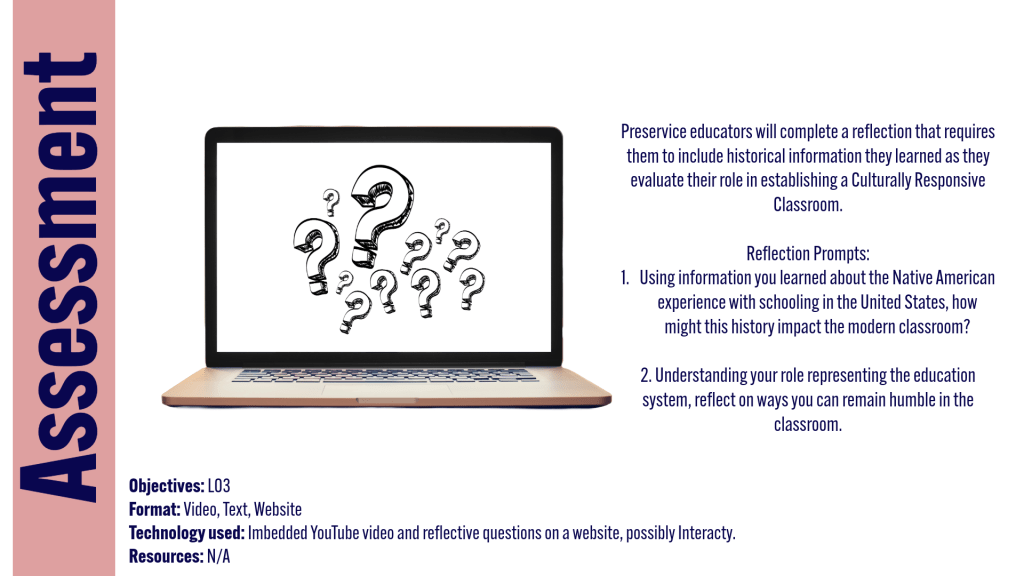
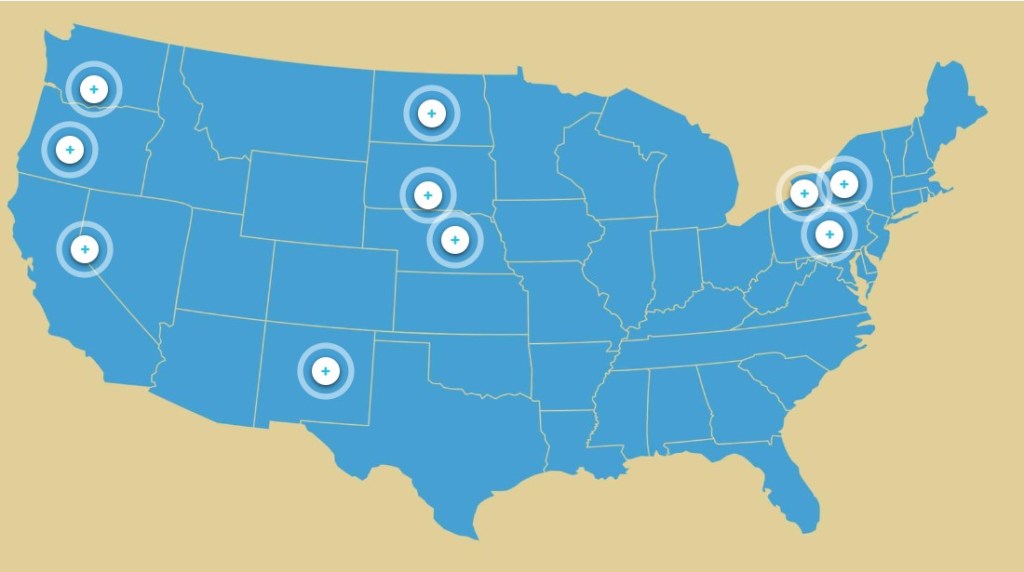
Because Native history is absent from the education system in this country, I had to make the assumption the learner would know little about boarding schools. I wanted to make this learning interactive, so I wanted to develop an interactive map that the learner could navigate. I wanted the image of the continental United States to remind the learner that this is all stolen land. There is so much history to present, but I hope with the interactive elements of this module it will inspire the learners to explore more of this history on their own. Developing culturally responsive classrooms requires reflection and that is the process I want my learners to explore how they can take the content of this module and adapt it to their classrooms. Below is the proposed storyboard I used for my module.



Development
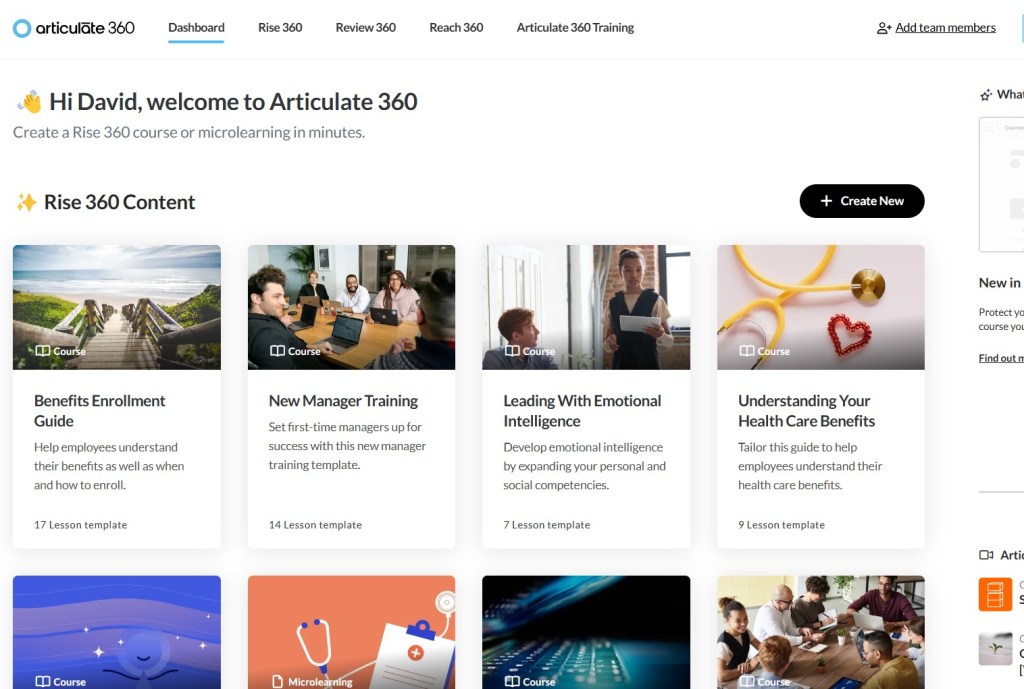
Adobe Express was my best friend when developing this module. It allowed me to edit photos, video, audio, remove backgrounds, and much more. I used my cell phone to capture photos and videos, and then use Adobe Express to do all the necessary edits I needed. My final edit of all videos was completed in Clipchamp. Below are screenshots showing the technology I used for building my module.

Module Pilot Test and Revision
Feedback I received from my peer led me to creating better learning objectives. My learning objectives were not quite clear and this feedback prompted me to spend more time with wording and intent. There were other technical problems that were brought my attention along with photo editing that was easily fixed. After staring at a project for a long time, it becomes easier to miss some of these essential edits.
Implementation of Module
I still maintain a close relationship with educators in the LaFayette Central School District. I plan to have my module reviewed by them for feedback. One of these individuals is a member of the Onondaga Nation. It is important for me to receive feedback from someone whose history and culture was negatively impacted by the federal government.

Evaluation
I was prompted to create this module because of an incident that happens far too often in classrooms because the history of underrepresented people remains untold. Measuring the effectiveness of this module would require a longitudinal study. It would require collecting data from students, educators, parents, and community partners. This data collection can be done, but is not something I would be able to achieve on my own. For right now, collecting feedback from my educator friends would help me evaluate this learning module and determine if I should develop a multi-lesson learning module. I do believe for this content to be adequate, it requires more than one module.
Check out the Module


 David Stablein Instructional Designer